Colonial Park Cemetery
Colonial Park Cemetery stands as one of Savannah's most historically significant and reputedly haunted locations, offering visitors a profound connection to the city's 18th and early 19th-century past. Established in 1750, this six-acre burial ground served as Savannah's primary cemetery for nearly a century, receiving the remains of Revolutionary War soldiers, Yellow Fever epidemic victims, prominent early citizens, and thousands of ordinary residents whose lives and deaths shaped the young city. The cemetery closed to new burials in 1853 but remains preserved as a beautiful historic park where moss-draped live oaks shade weathered monuments, brick pathways wind through the grounds, and the boundary between past and present feels remarkably permeable. The cemetery's historical significance extends far beyond its function as a burial ground. Walking through Colonial Park is walking through Savannah's founding narrative, with graves marking the city's most significant early families, Revolutionary War heroes who defended Georgia from British occupation, victims of the devastating Yellow Fever epidemics that repeatedly swept through the port city, and ordinary citizens whose tombstone inscriptions provide glimpses into 18th-century life, death, and beliefs. The cemetery's layout—with its grid of brick pathways, mature oak trees planted in the 1800s, and ornate brick vault tombs built above ground to prevent flooding—reflects traditional Southern cemetery design. The monuments themselves, ranging from simple headstones to elaborate marble memorials with carved angels and urns, represent evolving funerary art and social customs across nearly a century of burials. But Colonial Park Cemetery's significance in contemporary Savannah extends beyond historical and architectural appreciation. The cemetery has earned an international reputation as one of America's most haunted burial grounds, with consistent reports of paranormal phenomena spanning decades: apparitions photographed among the monuments, mysterious lights and mists captured in the darkness, unexplained cold spots on warm Southern nights, the sensation of being watched or followed, and EVP (Electronic Voice Phenomena) recordings capturing voices when no living people are present. The cemetery is a required stop on virtually every Savannah ghost tour, with nighttime visits creating atmospheric experiences where historical narrative, cemetery ambiance, and potential supernatural encounters combine to create one of Savannah's most memorable paranormal destinations. Today, Colonial Park Cemetery operates as a public park open daily for historical visits, photography, and quiet contemplation. The Savannah Parks Department maintains the grounds, preserving monuments and vegetation while allowing visitors to explore freely during daylight hours. Evening hours bring organized ghost tours that provide historical context, paranormal investigation techniques, and opportunities to experience the cemetery's haunted reputation. Whether you're interested in Colonial and Revolutionary War history, 18th-century funerary art and customs, beautiful cemetery landscapes, or documented paranormal activity, Colonial Park Cemetery offers a multifaceted experience where Savannah's past remains vividly present among the moss and monuments.
Location
201 Abercorn Street, Savannah, GA 31401
Historic District (Between Oglethorpe Avenue and Perry Street)
Hours
Cemetery gates open daily 8am until dusk (approximately 5:30pm winter, 8:30pm summer). Public access free during daylight hours. Ghost tours operate nightly 7pm-11pm through various tour companies (separate admission).
[object Object]
Pricing
$
Cemetery admission completely FREE during daylight hours for self-guided exploration. Ghost tours $25-35 per person (90-120 minute tours, advance booking recommended, especially October). Private paranormal investigations $150-300 (after-hours access, 2-4 hours, groups up to 10).
Best Time to Visit
Time Needed
Self-guided daytime visit: 30-60 minutes. Photography and monument study: 60-90 minutes. Ghost tours: 90-120 minutes including historical narrative and paranormal investigation time.
Discover More Things to Do in Savannah
Find the best dining, attractions, entertainment, and experiences across Savannah. Create your perfect itinerary and discover why the Hostess City captivates every visitor.
Savannah's Historic Burial Ground
Colonial Park Cemetery occupies a unique position in Savannah's historical and cultural landscape as both a meticulously preserved historical site and one of the city's most actively haunted locations. Established in 1750 when Savannah was still a young colonial settlement, the cemetery served the city for over a century, receiving burials until 1853 when it reached capacity and newer cemeteries opened to serve Savannah's growing population. Those 103 years of continuous use mean the cemetery contains the remains of thousands of Savannah residents spanning the Colonial period, the Revolutionary War, the early Republic, and the antebellum era. Walking through Colonial Park is literally walking through Savannah's founding generations—the people who built the young city, defended it from British occupation, survived repeated epidemic diseases, and established the cultural and commercial foundations that made Savannah prosper.
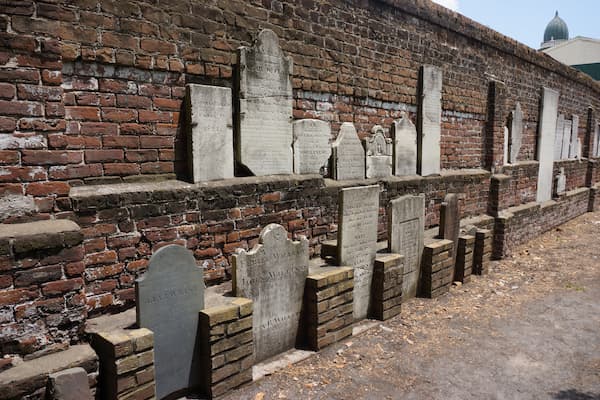
The cemetery's six acres are laid out in a grid pattern typical of 18th-century burial grounds, with brick pathways creating orderly routes through the graves and mature live oak trees providing shade and the distinctive Spanish moss drapery that defines Savannah's landscape. The monuments themselves form a museum of funerary art spanning more than a century of changing styles, materials, and customs. Simple fieldstone markers from the earliest colonial burials stand alongside elaborate marble monuments from the antebellum period, featuring carved angels, urns, obelisks, and intricate epitaphs that reveal 18th and 19th-century attitudes toward death, remembrance, and the afterlife. Above-ground brick vault tombs, built to prevent flooding in Savannah's low-lying terrain, line the cemetery's Oglethorpe Avenue side, creating distinctive architectural elements that appear in countless photographs and paintings of historic Savannah.
But Colonial Park Cemetery's contemporary significance extends far beyond its function as a beautiful historic park and genealogical resource. The cemetery has earned an international reputation among paranormal investigators and ghost enthusiasts as one of America's most actively haunted burial grounds. The concentration of traumatic deaths—Yellow Fever victims dying by the hundreds during epidemic years, Revolutionary War casualties, victims of violence and accidents—combined with the age of the burials and the preserved 18th-century landscape have created what paranormal researchers describe as optimal conditions for supernatural phenomena. Reports of paranormal activity span decades and include apparitions photographed among the monuments, mysterious lights and mists captured in photographs and videos, unexplained electromagnetic readings, EVP recordings of voices when no living people are present, and physical sensations of being watched, touched, or followed through the cemetery's pathways.
Today, Colonial Park Cemetery serves multiple functions: a historical park where visitors can explore Savannah's early history through monuments and epitaphs; a beautiful public space offering shaded pathways, mature trees, and peaceful contemplation; a photography location where the combination of architecture, landscape, and lighting creates stunning images; and a paranormal investigation site where thousands of visitors annually seek encounters with the supernatural. The cemetery's free daytime access makes it approachable for casual historical exploration, while nighttime ghost tours provide structured paranormal experiences with historical context and investigation techniques. Whether your interest is history, photography, landscape design, genealogy, or the paranormal, Colonial Park Cemetery offers a rich, multifaceted experience where Savannah's past remains remarkably present and accessible in the heart of the modern city.
    <!-- Historical Significance -->
    <section id="historical-significance" class="mb-12">
      <h2 class="text-3xl font-bold text-onyx mb-4">Buried History: Colonial Era to Antebellum South</h2>
      <p class="text-lg leading-relaxed mb-4">
        Colonial Park Cemetery opened in 1750, just 17 years after James Oglethorpe founded Savannah as the capital of Georgia Colony. The cemetery's establishment reflected the young city's need for organized burial space as the original Christ Church burial ground reached capacity. The six-acre site was positioned at what was then the southern edge of the developed city, safely outside the settlement proper as health concerns dictated burial grounds be located away from residences and water sources. The cemetery's brick walls, constructed in the 1750s and later rebuilt and expanded, created a defined sacred space separating the dead from the living while keeping the cemetery within walking distance of the growing town. This 18th-century cemetery layout and location remain largely unchanged, providing contemporary visitors with an authentic spatial experience of colonial-era Savannah.
      </p>
      <p class="text-lg leading-relaxed mb-4">
        The Revolutionary War period brought significant burials to Colonial Park Cemetery as Savannah became a contested battleground between British and American forces. The British occupied Savannah from 1778-1782, and the failed Siege of Savannah in 1779—a bloody battle where combined American and French forces attempted to retake the city—resulted in hundreds of casualties buried in mass graves. Button Gwinnett, one of Georgia's three signers of the Declaration of Independence, was buried in Colonial Park (though the exact location of his grave is now unknown, likely lost when the cemetery was vandalized during Union occupation in the Civil War). Revolutionary War heroes and ordinary soldiers rest throughout the cemetery, their graves marked by weathered stones bearing patriotic inscriptions and military imagery. These burials transformed Colonial Park from a simple cemetery into a patriotic memorial space connecting Savannah to the Revolutionary generation and the founding of the American republic.
      </p>
      <p class="text-lg leading-relaxed mb-4">
        The most tragic chapter in Colonial Park Cemetery's history involves the Yellow Fever epidemics that repeatedly devastated Savannah in the late 18th and early 19th centuries. Yellow Fever, a mosquito-borne viral disease, struck port cities like Savannah with terrifying regularity, killing victims within days of infection. The epidemics of 1820 and 1854 were particularly deadly, killing hundreds of Savannah residents and overwhelming the city's medical resources and burial capacity. Colonial Park Cemetery received mass burials during these outbreaks, with victims buried quickly in unmarked graves to prevent disease spread. The social trauma of these epidemics—entire families wiped out within days, bodies piling up faster than gravediggers could inter them, the terror of a disease that killed seemingly at random—left deep psychological scars on Savannah's collective memory. Paranormal researchers believe this concentrated suffering and traumatic death created supernatural imprints that contribute to the cemetery's haunted reputation.
      </p>
      <p class="text-lg leading-relaxed">
        The cemetery closed to new burials in 1853 as it reached capacity and newer, larger cemeteries (including Bonaventure and Laurel Grove) opened to serve Savannah's growing population. During the Civil War, Union forces occupying Savannah vandalized Colonial Park Cemetery, toppling monuments, altering dates on tombstones as pranks, and desecrating graves—damage still visible today in the form of altered inscriptions and missing monuments. After the war, the cemetery entered a period of neglect before the city took over maintenance in the early 20th century, gradually restoring it as a historic park. Today, Colonial Park Cemetery is maintained by Savannah's Parks and Recreation Department as a historic site, with preservation efforts focused on stabilizing monuments, controlling vegetation, and maintaining accessibility while respecting the cemetery's character as a sacred space containing the remains of thousands of Savannah's earliest residents. The cemetery's survival as a preserved historic landscape in the heart of modern Savannah provides an invaluable connection to the city's founding generations and the cycles of life, death, and remembrance that shaped early American urban culture.
      </p>
    </section>

    <!-- Notable Burials & Monuments -->
    <section id="notable-burials" class="mb-12">
      <h2 class="text-3xl font-bold text-onyx mb-4">Significant Graves & Funerary Art</h2>
      <p class="text-lg leading-relaxed mb-4">
        Colonial Park Cemetery contains the graves of numerous historically significant early Savannahians, though many grave locations are now unknown due to weathered markers and Civil War vandalism. Button Gwinnett, Georgia's most famous signer of the Declaration of Independence, was buried in Colonial Park following his death in a duel in 1777, but the exact location of his grave is unknown—making it one of American history's lost burial sites. Other notable Revolutionary War era burials include officers who served in Continental Army units and Georgia militia forces, their graves marked by stones bearing military emblems and patriotic inscriptions. The cemetery also contains the graves of early civic leaders, wealthy merchants who established Savannah's commercial foundations, ministers who served the city's churches, and physicians who battled (often unsuccessfully) the epidemic diseases that swept through the port city.
      </p>
      <p class="text-lg leading-relaxed mb-4">
        The cemetery's monuments represent a comprehensive survey of funerary art evolution from the mid-18th through mid-19th centuries. The earliest markers are simple fieldstone or locally-quarried sandstone, with minimal carving beyond names and dates—reflecting both the limitations of colonial craftsmanship and Puritan-influenced restraint in memorial displays. By the late 18th and early 19th centuries, monuments become more elaborate: carved marble headstones featuring death's-head imagery, winged cherubs, urns, and weeping willows (all common funerary symbols); tall obelisks marking family plots; and table tombs with carved epitaphs. The above-ground brick vault tombs along Oglethorpe Avenue represent a distinctive Southern cemetery tradition, built above ground to prevent flooding and allow family members to be interred together in dry conditions. These vaults, with their stuccoed brick construction and classical architectural details, create the cemetery's most distinctive architectural feature.
      </p>
      <p class="text-lg leading-relaxed mb-4">
        The cemetery's epitaphs provide fascinating glimpses into 18th and 19th-century attitudes toward death, memory, and the afterlife. Religious inscriptions dominated early graves, with Biblical verses and references to Christian resurrection hopes. Victorian-era monuments became more emotional and personal, with lengthy epitaphs describing the deceased's virtues, the family's grief, and hopes for heavenly reunion. Some epitaphs offer touching biographical details: young mothers who died in childbirth, children taken by disease, sea captains lost at sea, and elderly residents who survived to remarkable ages despite the era's health challenges. The vandalism from Union occupation adds a bizarre historical layer—some tombstones bear altered dates or crude additions carved by bored soldiers, creating unintended historical documentation of the Civil War's impact on Savannah. These layered inscriptions and monuments make Colonial Park Cemetery a primary source for understanding early Savannah society and the human experiences of illness, death, and remembrance in the 18th and 19th centuries.
      </p>
      <p class="text-lg leading-relaxed">
        For genealogists and family historians, Colonial Park Cemetery is an invaluable resource for tracing Savannah's founding families. Many of the city's oldest and most prominent families—including Habershams, Telfairs, Joneses, and others whose names mark Savannah streets and squares—have members buried in Colonial Park. The cemetery's monuments document marriages, family connections, and generational continuities that shaped early Savannah society. Historical societies and genealogy organizations have created databases cataloging Colonial Park's known burials, providing resources for researchers tracing family histories. But the cemetery also represents the many unnamed and forgotten dead: enslaved people buried in unmarked graves, paupers interred without monuments, epidemic victims buried in mass graves, and thousands of ordinary Savannahians whose markers have weathered beyond legibility or disappeared entirely. These forgotten burials remind visitors that the cemetery contains far more than the 600-700 visible monuments suggest—beneath the pathways and lawns rest thousands of individuals whose lives and deaths shaped Savannah's founding generations.
      </p>
    </section>

    <!-- Paranormal Activity & Ghost Tours -->
    <section id="paranormal-activity" class="mb-12">
      <h2 class="text-3xl font-bold text-onyx mb-4">Savannah's Most Haunted Cemetery</h2>
      <p class="text-lg leading-relaxed mb-4">
        Colonial Park Cemetery's reputation as one of America's most haunted burial grounds is built on consistent paranormal reports spanning decades, documented by professional investigators, ghost tour guides, and thousands of visitors. The cemetery's paranormal activity manifests in various forms, with certain phenomena reported so frequently they've become expected rather than exceptional. Apparitions are regularly photographed throughout the cemetery, appearing as semi-transparent figures in period clothing, shadowy forms moving between monuments, or full-bodied figures that appear solid in photographs but weren't visible to photographers when pictures were taken. These apparitions show distinct patterns: a woman in colonial-era dress frequently reported near the Oglethorpe Avenue vault tombs, shadow figures moving along the brick pathways, and what witnesses describe as residual haunting—spectral figures appearing to reenact past events without interacting with living observers.
      </p>
      <p class="text-lg leading-relaxed mb-4">
        Photography in Colonial Park Cemetery frequently produces anomalous results that defy conventional explanation. Orbs—circular light anomalies appearing in digital photographs—manifest throughout the cemetery with such frequency they're considered normal rather than exceptional (though paranormal investigators debate whether orbs represent genuine supernatural phenomena or simple dust and moisture particles). More compelling are the mists and fogs that appear in photographs taken on clear nights with no atmospheric conditions explaining their presence. These mists often appear localized around specific monuments or following pathways, suggesting intelligent movement rather than random atmospheric effects. Infrared photography reveals additional anomalies invisible to normal vision: cold spots registering significantly lower temperatures than surrounding areas, electromagnetic field variations detected by EMF meters, and occasional full-bodied shadow figures captured in infrared images but not visible to the naked eye.
      </p>
      <p class="text-lg leading-relaxed mb-4">
        EVP (Electronic Voice Phenomena) investigations in Colonial Park Cemetery have produced some of Savannah's most compelling paranormal audio evidence. Investigators using digital voice recorders ask questions aloud in empty sections of the cemetery, then review recordings for voices or sounds that weren't audible during recording. Colonial Park EVP sessions have captured what researchers interpret as responses to questions—"Who are you?" followed by names or descriptions; "What year is it?" followed by dates from the 18th or 19th centuries; and unprompted statements like "Leave" or "Help me" that suggest conscious communication rather than random audio artifacts. Some EVP recordings capture what sounds like multiple voices conversing, period music, or the sounds of activities (footsteps, door closing, tools) that couldn't have physical sources in the empty cemetery. While EVP interpretation remains controversial even among paranormal investigators, the consistency of Colonial Park recordings and their correlation with the cemetery's history has made it a premier location for EVP research.
      </p>
      <p class="text-lg leading-relaxed">
        Physical and sensory experiences reported in Colonial Park Cemetery create the most unsettling encounters for visitors. People describe being followed through the cemetery by unseen presences, experiencing sudden intense cold spots on warm Southern nights with no meteorological explanation, and feeling invisible hands touch their shoulders or hair. Some visitors report overwhelming emotional experiences: profound sadness near certain graves, anxiety or fear in specific sections of the cemetery, or conversely, feelings of peace and welcome in areas associated with children's graves. Paranormal investigators using EMF meters (which detect electromagnetic fields) report consistent electromagnetic anomalies in specific cemetery locations, with readings spiking when questions are asked or when photographers take pictures. Motion-sensor equipment triggers without visible cause, suggesting movement through detection fields. These physical and environmental phenomena, combined with visual and audio anomalies, create multilayered paranormal experiences that have made Colonial Park Cemetery a required destination for serious paranormal investigators and a highlight of Savannah's ghost tourism industry.
      </p>
    </section>

    <!-- Visiting the Cemetery -->
    <section id="visiting-cemetery" class="mb-12">
      <h2 class="text-3xl font-bold text-onyx mb-4">Exploring Colonial Park Cemetery</h2>
      <p class="text-lg leading-relaxed mb-4">
        <strong>Daytime Self-Guided Visits:</strong> Colonial Park Cemetery is completely free and open to the public daily from 8am until dusk, making it one of Savannah's most accessible historical attractions. Daytime visits offer the best conditions for photography (natural light beautifully illuminates the monuments and moss-draped oaks), reading epitaphs and inscriptions, studying funerary art and monument styles, and peaceful contemplation in a beautiful historic landscape. The cemetery's brick pathways create clear routes through the grounds, with informational plaques providing historical context about significant burials, architectural features, and the cemetery's history. Spring visits (March-April) coincide with blooming azaleas and mild temperatures, while autumn (October-November) offers comfortable weather and beautiful lighting. Summer visits should be scheduled for morning hours to avoid Savannah's intense heat and humidity.
      </p>
      <p class="text-lg leading-relaxed mb-4">
        <strong>Ghost Tours & Nighttime Experiences:</strong> Virtually every Savannah ghost tour company includes Colonial Park Cemetery as a major stop on their routes, recognizing its significance in the city's paranormal landscape. Tours typically operate nightly with multiple departure times between 7pm-11pm, lasting 90-120 minutes and covering 8-12 locations including Colonial Park. The cemetery segment usually includes 20-30 minutes of historical narrative about the cemetery's founding, significant burials, Yellow Fever epidemics, and documented paranormal activity, followed by time for participants to explore with their cameras and attempt their own paranormal photography. Tour guides often provide basic paranormal investigation instruction—how to use EMF meters, techniques for EVP recording, optimal camera settings for capturing anomalies. Booking tours during October (Halloween season) requires advance reservations as demand is high; other months usually allow same-day or next-day booking.
      </p>
      <p class="text-lg leading-relaxed mb-4">
        <strong>Photography & Investigation Tips:</strong> Colonial Park Cemetery is a photographer's paradise, with composition opportunities combining historic architecture, natural landscape, and dramatic lighting. Daytime photography benefits from morning or late afternoon side-lighting that emphasizes monument textures and creates dramatic shadows through the oak trees. For paranormal photography, digital cameras work better than smartphones as they offer manual controls for low-light settings—use slow shutter speeds, wide apertures, and elevated ISO settings for nighttime monument photography. Infrared-capable cameras or modified full-spectrum cameras (which capture light beyond normal human vision) have produced the most compelling paranormal images in Colonial Park. For EVP investigation, use digital voice recorders rather than smartphone apps (dedicated recorders have better audio fidelity), clearly announce the time and location before each recording session, and review audio immediately to identify compelling segments while memory of the session is fresh.
      </p>
      <p class="text-lg leading-relaxed">
        <strong>Respectful Cemetery Etiquette:</strong> While Colonial Park Cemetery welcomes visitors and recognizes its dual function as historical park and paranormal investigation site, respect for the space as a cemetery containing human remains is essential. Stay on marked pathways rather than walking directly over grave sites. Do not touch or lean on fragile historic monuments—many are weathered and vulnerable to damage. No rubbings or tracings of inscriptions (these damage stone surfaces). Keep voices respectfully low, particularly during daytime visits when people may be conducting genealogy research or quiet contemplation. No alcohol, smoking, or littering. Dogs must be leashed and waste removed. Photography is encouraged but avoid intrusive flash photography that disturbs other visitors. For evening paranormal investigations, respectfully request permission before photographing other tour participants or investigators. These basic considerations maintain Colonial Park Cemetery as a welcoming space that serves both historical preservation and paranormal investigation while honoring its fundamental character as a sacred burial ground.
      </p>
    </section>

    <!-- Related Haunted Attractions -->
    <section id="related-attractions" class="mb-12">
      <h2 class="text-3xl font-bold text-onyx mb-4">More Haunted Savannah Destinations</h2>
      <p class="text-lg leading-relaxed">
        Colonial Park Cemetery is one piece of Savannah's comprehensive haunted landscape. <a href="/things-to-do/bonaventure-cemetery" class="text-azure-dark-primary font-semibold hover:underline">Bonaventure Cemetery</a>, located east of downtown, offers a larger, Victorian-era cemetery experience with elaborate monuments, waterfront location, and its own paranormal reputation enhanced by "Midnight in the Garden of Good and Evil" fame. <a href="/things-to-do/kehoe-house" class="text-azure-dark-primary font-semibold hover:underline">The Kehoe House</a> provides overnight haunted experiences in an 1892 Victorian mansion with child spirit encounters. <a href="/things-to-do/marshall-house" class="text-azure-dark-primary font-semibold hover:underline">The Marshall House</a>, a Civil War hospital hotel, offers another overnight option with soldier spirit activity. <a href="/things-to-do/sorrel-weed-house" class="text-azure-dark-primary font-semibold hover:underline">The Sorrel-Weed House</a> provides structured paranormal investigation experiences in an 1840s mansion with tragic history. Combining Colonial Park Cemetery visits with these other haunted locations creates a comprehensive paranormal experience exploring different types of supernatural phenomena—cemetery hauntings, residential spirits, hospital trauma, and investigation-based research—that collectively demonstrate why Savannah has earned its reputation as one of America's most haunted cities.
      </p>
    </section>
  </div>
Visitor Information
Parking
Free street parking on Abercorn Street adjacent to cemetery (metered Mon-Sat 8am-8pm, $1.50/hour). Free unrestricted parking on side streets (Oglethorpe Avenue, Harris Street). Closest public parking garage: Broughton Street Garage (3 blocks, $1.50/hour, $12/day max). Bike racks on Abercorn Street near cemetery entrance.
Accessibility
- Accessible parking available
- Near public transit
Historic cemetery with original brick pathways (some uneven surfaces). Main pathways are paved and navigable. Grass areas between monuments may be challenging for wheelchairs. No public restrooms within cemetery. Shaded seating benches throughout. Free street parking on Abercorn and Oglethorpe. CAT bus stop on Abercorn Street (immediate).
Related Attractions
- Cathedral of St. John the Baptist (2 blocks) - stunning Gothic Revival cathedral
- Telfair Museums (2 blocks) - art and architecture museums
- Madison Square (2 blocks) - beautiful historic square with monuments
- Forsyth Park (3 blocks) - iconic fountain and 30-acre urban park
- Mercer-Williams House (4 blocks) - Midnight in the Garden of Good and Evil literary landmark
- New Oak Theatre