The Sorrel-Weed House
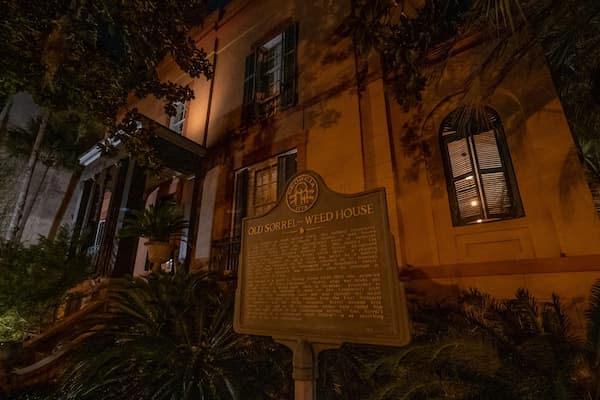
The Sorrel-Weed House stands as one of Savannah's most architecturally significant and reputedly haunted historic mansions. Built in 1840 for wealthy merchant Francis Sorrel, this magnificent Greek Revival masterpiece showcases the height of antebellum architectural ambition with its grand portico, Corinthian columns, and elegant proportions that dominate Madison Square's northern edge. But beyond its architectural splendor, the Sorrel-Weed House is renowned for one of Savannah's most tragic and enduring ghost stories—the tale of Matilda Sorrel, Francis's young wife, whose death under mysterious circumstances in 1860 created a supernatural legacy that paranormal investigators and visitors still encounter more than 160 years later. The mansion's haunted reputation centers on the tragic events of October 1860, when both Matilda Sorrel and Molly, an enslaved woman with whom Francis was rumored to have had a relationship, died on the same day under circumstances that have fueled speculation and supernatural accounts for generations. According to historical records and local lore, Molly died (or was killed) in the carriage house behind the main mansion, and Matilda either jumped or fell from a second-floor balcony hours later. The proximity of these deaths, the rumored relationship between Francis and Molly, and the violence suggested by the circumstances created a tragedy that seemed to imprint itself on the building. Today, visitors and paranormal investigators report encounters with a female spirit in the basement and carriage house—believed to be Molly—and a profound sadness in the rooms Matilda once occupied, particularly near the second-floor balcony where she died. What makes the Sorrel-Weed House particularly significant in Savannah's paranormal landscape is its commitment to serious investigation and documentation. Unlike many allegedly haunted locations that rely on theatrical presentation and legend, the Sorrel-Weed House opens its doors to professional paranormal research teams and offers public paranormal investigation tours where visitors can use actual investigation equipment—EMF meters, digital voice recorders, infrared cameras—to conduct their own research. The building's current owners maintain detailed records of supernatural phenomena reported across decades of investigations, creating a database of encounters that shows consistent patterns: specific locations where phenomena occur most frequently, types of experiences reported (cold spots, apparitions, voices, physical sensations), and correlations between paranormal activity and the building's tragic history. Today, the Sorrel-Weed House operates as a museum and paranormal investigation center, offering daily historical tours that explore the mansion's architecture, the Sorrel family history, and antebellum Savannah society, as well as evening paranormal investigation experiences that provide access to the building's most active supernatural locations. The mansion preserves period furnishings, architectural details, and the physical spaces where the 1860 tragedies occurred, allowing visitors to connect historical narrative with paranormal experience. Whether you approach the building as a skeptic interested in beautiful architecture and tragic history, or as a believer seeking genuine supernatural encounters, the Sorrel-Weed House offers a deeply affecting experience where the boundary between documented history and unexplained phenomena creates one of Savannah's most compelling destinations.
Location
6 West Harris Street, Savannah, GA 31401
Madison Square Historic District
Hours
Historical architecture tours daily 10:30am-4pm (last tour). Paranormal investigation experiences 7pm-11pm nightly (reservations required). Extended hours during October. Closed Thanksgiving, Christmas.
[object Object]
Pricing
$$
Historical architecture tours $18 adults, $10 children (6-12), under 6 free. Paranormal investigation tours $30-$45 per person depending on duration and group size. Private paranormal investigations $300-$500 (2-4 hours, up to 10 people). Combination historical + paranormal packages available.
Best Time to Visit
Time Needed
Historical architecture tour: 45-60 minutes. Paranormal investigation tour: 2-3 hours. Serious paranormal enthusiasts should book private overnight investigations (4-8 hours).
Discover More Things to Do in Savannah
Find the best dining, attractions, entertainment, and experiences across Savannah. Create your perfect itinerary and discover why the Hostess City captivates every visitor.
Architecture, Tragedy, and Supernatural Mystery
The Sorrel-Weed House commands attention on Madison Square through sheer architectural magnificence—its imposing Greek Revival facade with grand Corinthian columns and perfectly proportioned pediment represents antebellum Savannah's most ambitious residential architecture. Built in 1840 for Francis Sorrel, a prosperous Savannah merchant, the mansion embodied the wealth, sophistication, and social aspirations of the city's commercial elite in the decade before the Civil War. Architect Charles Cluskey designed the building to make a statement of permanence and refinement, using expensive materials, classical proportions, and elaborate decorative details that proclaimed the Sorrel family's success and cultural sophistication. The building survives today as one of Georgia's finest examples of Greek Revival residential architecture and one of Savannah's most photographed historic structures.
But the Sorrel-Weed House's significance extends far beyond architectural history. The building is the site of one of Savannah's most enduring and tragic ghost stories—the deaths of Matilda Sorrel and an enslaved woman named Molly on the same day in October 1860. The circumstances surrounding these deaths—the rumored relationship between Francis Sorrel and Molly, Molly's violent death in the carriage house, and Matilda's death hours later (either suicide or accident) from a second-floor balcony fall—created a tragedy that has echoed through the building for more than 160 years. Paranormal investigators, visitors, and even skeptical researchers report consistent supernatural phenomena throughout the mansion, particularly in the basement, carriage house, and the rooms Matilda occupied. These experiences have made the Sorrel-Weed House one of America's most investigated haunted locations and a pilgrimage site for paranormal enthusiasts worldwide.
What distinguishes the Sorrel-Weed House in Savannah's haunted landscape is its approach to paranormal investigation. Rather than offering theatrical ghost tours focused on legend and entertainment, the mansion opens its doors to serious paranormal research and provides public investigation experiences where visitors use actual research equipment—EMF meters, digital voice recorders, infrared thermal cameras, motion sensors—to conduct their own investigations. The building's owners maintain extensive documentation of reported phenomena spanning decades, creating a research database that shows patterns: which locations experience the most activity, what types of phenomena occur most frequently, and how paranormal encounters correlate with the building's documented history. This commitment to serious investigation rather than theatrical presentation has made the Sorrel-Weed House a respected research site among paranormal investigators while offering casual visitors genuine opportunities to explore supernatural mystery with professional guidance and equipment.
    <!-- Architectural Significance -->
    <section id="architecture" class="mb-12">
      <h2 class="text-3xl font-bold text-onyx mb-4">Greek Revival Architectural Masterpiece</h2>
      <p class="text-lg leading-relaxed mb-4">
        The Sorrel-Weed House represents the apex of Greek Revival residential architecture in Georgia, designed by Charles Cluskey (who also designed the historic Customs House on River Street) and completed in 1840 at significant expense. The mansion's principal facade facing Madison Square features a monumental two-story portico supported by four colossal Corinthian columns—the most elaborate of the classical column orders, characterized by ornate capitals decorated with acanthus leaves and scrolls. The portico is crowned with a full entablature and pediment featuring classical moldings and proportions derived from ancient Greek temples. This bold classical vocabulary was intended to associate the Sorrel family with the democratic ideals and cultural sophistication of ancient Greece, while the building's scale and prominent position on the square proclaimed their wealth and social standing.
      </p>
      <p class="text-lg leading-relaxed mb-4">
        The mansion's construction utilized the finest available materials and craftsmanship. The exterior walls are brick covered with scored stucco to resemble cut stone blocks, a technique that created the appearance of expensive ashlar masonry at reduced cost. The windows feature granite lintels and sills, with the first-floor windows extending nearly floor-to-ceiling and protected by ornate cast-iron balconies. The entrance doorway showcases sidelights and transom of leaded glass, with the original solid mahogany door featuring raised panels and period hardware. The building's English basement—a raised basement creating a high first floor—was typical of Savannah architecture, elevating the main living spaces above potential flooding while providing service and storage spaces below. This basement level, later the site of tragic events and current paranormal activity, was originally designed for practical household functions.
      </p>
      <p class="text-lg leading-relaxed mb-4">
        The mansion's interior reflects the formal room arrangements and decorative sophistication expected in elite antebellum homes. A central hall with geometric floor tiles and elaborate plasterwork provides access to double parlors on one side and formal dining room on the other. These principal rooms feature 14-foot ceilings with ornate plaster crown moldings and ceiling medallions, marble fireplace mantels with carved details, and tall windows flooding the spaces with natural light. The double parlors could be separated by pocket doors for intimate entertaining or opened into a grand reception space for large social events. Original heart pine floors, plaster walls covered in period-appropriate wallpapers, and gas lighting fixtures (converted to electricity in the early 20th century) create an authentic antebellum atmosphere. The mansion's second floor contained family bedrooms and private sitting rooms, including the spaces Matilda Sorrel occupied and where her tragic story unfolded.
      </p>
      <p class="text-lg leading-relaxed">
        Behind the main mansion stands the carriage house—a two-story brick structure originally serving practical purposes (horse stabling, carriage storage, servants' quarters) but now infamous as the site of Molly's death and intense ongoing paranormal activity. The carriage house's brick construction, exposed beam ceilings, and period architectural details have been preserved, maintaining the building's 1840s appearance while allowing paranormal investigators access to this historically and supernaturally significant space. The physical connection between the mansion and carriage house—separated by a brick courtyard but intrinsically linked through the tragic events of October 1860—creates a complete historic compound where visitors can experience both the elegance of antebellum elite society and the darker realities of slavery, violence, and tragedy that coexisted with that elegance. The buildings' architectural preservation allows contemporary visitors to inhabit the same physical spaces where the historical tragedy occurred, creating powerful connections between past events and present paranormal experiences.
      </p>
    </section>

    <!-- The Tragic History -->
    <section id="tragic-history" class="mb-12">
      <h2 class="text-3xl font-bold text-onyx mb-4">October 1860: The Deaths that Haunt the Mansion</h2>
      <p class="text-lg leading-relaxed mb-4">
        The tragedy that created the Sorrel-Weed House's supernatural reputation occurred on a single day in October 1860, when two women died under circumstances that have been debated, mythologized, and investigated for more than 160 years. Francis Sorrel, the mansion's owner, was a successful Savannah merchant with business connections throughout the South and a prominent position in the city's commercial and social elite. He was married to Matilda, described in historical accounts as a refined, cultured woman from a respectable Savannah family. The couple lived in the mansion with their children and a household of enslaved people who maintained the property and served the family's needs. Among these enslaved people was a young woman named Molly, and according to longstanding local accounts and historical speculation, Francis and Molly had a relationship that was known or suspected by household members including Matilda.
      </p>
      <p class="text-lg leading-relaxed mb-4">
        On the day in question, Molly died in the carriage house behind the main mansion. Historical records and local accounts vary on the circumstances: some versions describe her death as suicide by hanging, others as an accident, and some darker interpretations suggest violence or murder. What is documented is that Molly's body was discovered in the carriage house, and the news of her death reached the main mansion where Matilda learned of it. Hours later, Matilda either jumped or fell from a second-floor balcony of the mansion, dying from her injuries. Historical records list her death as accidental, but local tradition has long speculated that Matilda's death was suicide prompted by grief, betrayal, or the revelation of her husband's relationship with Molly. The proximity of these two deaths—occurring on the same day in connected buildings—created a tragedy that seemed almost operatic in its emotional intensity and violence.
      </p>
      <p class="text-lg leading-relaxed mb-4">
        The historical facts about these deaths are limited by the nature of 1860s record-keeping and the social dynamics that surrounded both slavery and female respectability in the antebellum South. Death records from this era are sparse, and the deaths of enslaved people were often not recorded with the same detail as those of white citizens. Matilda's death would have been carefully documented to avoid scandal, with "accident" being the socially acceptable explanation regardless of actual circumstances. The relationship between Francis and Molly, if it existed, would not have been acknowledged in polite society, though such relationships between slaveholders and enslaved women were tragically common in the antebellum South. This combination of limited documentation, social taboos, and the inherently traumatic nature of the events has created a historical mystery where the emotional truth (tragedy, betrayal, violence, grief) is clear even while specific facts remain uncertain.
      </p>
      <p class="text-lg leading-relaxed">
        Francis Sorrel continued to live in the mansion after these tragic deaths, eventually remarrying and residing in the house until his own death decades later. But according to paranormal researchers and the consistent reports of building occupants and visitors over the past 160+ years, neither Matilda nor Molly left the property where they died. The supernatural phenomena reported at the Sorrel-Weed House align precisely with the circumstances of their deaths: encounters with a female spirit in the basement and carriage house believed to be Molly, profound sadness and emotional distress reported in the upper-floor rooms Matilda occupied, and cold spots and apparitions near the balcony where she died. These consistent reports, spanning generations of witnesses who may not have known the building's history, suggest that the violence and emotional trauma of October 1860 created a supernatural imprint that remains perceptible to sensitive visitors more than a century and a half later.
      </p>
    </section>

    <!-- Paranormal Investigation Experiences -->
    <section id="paranormal-investigations" class="mb-12">
      <h2 class="text-3xl font-bold text-onyx mb-4">Investigating the Unexplained</h2>
      <p class="text-lg leading-relaxed mb-4">
        The Sorrel-Weed House distinguishes itself from theatrical ghost tours by offering genuine paranormal investigation experiences that provide participants with actual research equipment and methodology used by professional paranormal investigators. Evening investigation tours (typically 2-3 hours) begin with historical context about the building's architecture, the Sorrel family, and the tragic events of 1860 that created its haunted reputation. Participants are then equipped with EMF (electromagnetic field) meters that detect unexplained electromagnetic fluctuations often associated with paranormal activity, digital voice recorders for capturing Electronic Voice Phenomena (EVP), and infrared thermometers for detecting cold spots. The building's investigation areas—including the basement, carriage house, and upper floor rooms—are explored with minimal lighting to create optimal conditions for paranormal encounters and equipment readings.
      </p>
      <p class="text-lg leading-relaxed mb-4">
        The basement investigation typically produces the most dramatic results. This space—where household functions occurred and where historical accounts place Molly during her lifetime—consistently registers electromagnetic anomalies on EMF meters, with readings spiking in specific locations without identifiable electrical sources. Participants report sudden intense cold spots that move through the space, the sensation of being touched or having clothing tugged, and overwhelming emotional feelings ranging from profound sadness to anxiety and fear. EVP sessions in the basement have captured sounds interpreted as female voices responding to questions, footsteps when all participants are stationary, and what researchers describe as residual audio of past events—sounds from the building's history that seem to replay like a recording. Infrared photography in the basement frequently produces anomalous images: mists forming in front of cameras, orbs moving in intelligent patterns, and occasional shadow figures visible in photos but not to the naked eye during photography.
      </p>
      <p class="text-lg leading-relaxed mb-4">
        The carriage house investigation focuses on the building where Molly died and where paranormal activity is reportedly most intense and disturbing. Participants describe the space as having an oppressive, heavy atmosphere that creates immediate unease. EMF meters register consistent electromagnetic fluctuations, motion-sensor equipment triggers without visible cause, and temperature readings show localized cold spots that appear and dissipate without explanation. The most unsettling reports from the carriage house involve physical sensations: invisible hands touching faces or arms, feelings of being pushed or pulled, clothing being grasped, and what some describe as an angry or protective presence that doesn't want investigators in the space. Some investigation participants have left the carriage house refusing to return, while others find the intense activity compelling evidence for paranormal phenomena and spend extended investigation time trying to document and communicate with whatever presence inhabits the building.
      </p>
      <p class="text-lg leading-relaxed">
        The mansion's upper floors, particularly the rooms associated with Matilda Sorrel and the balcony where she died, present different paranormal phenomena. The activity here is described as less aggressive than the carriage house but more emotionally affecting. Participants report overwhelming feelings of sadness and grief in Matilda's rooms, with some sensitive individuals describing visions or impressions of a distressed woman in period clothing. The balcony area—still accessible and visibly original to the building—registers cold spots and electromagnetic anomalies. Some investigators report seeing shadowy figures moving past windows when viewed from Madison Square below. EVP sessions in the upper rooms have captured what researchers interpret as female voices expressing sadness, confusion, or seeking help. The emotional quality of the upper floor paranormal activity—grief rather than anger, sadness rather than aggression—aligns with the interpretation that these phenomena represent Matilda's spirit still processing the betrayal and tragedy that led to her death.
      </p>
    </section>

    <!-- Visiting Experiences -->
    <section id="visiting-experiences" class="mb-12">
      <h2 class="text-3xl font-bold text-onyx mb-4">Historical Tours & Public Investigations</h2>
      <p class="text-lg leading-relaxed mb-4">
        The Sorrel-Weed House offers two distinct visiting experiences that can be enjoyed separately or combined. Daily historical architecture tours (10:30am-4pm) focus on the building's 1840s Greek Revival design, period furnishings, antebellum Savannah society, and the Sorrel family's history without emphasizing paranormal aspects. These 45-60 minute tours are excellent for architecture enthusiasts, history students, and visitors interested in antebellum Southern culture. Guides provide detailed information about Charles Cluskey's architectural design, the materials and construction techniques used in the 1840s, typical room arrangements and social customs in elite homes, and the practical realities of maintaining a large household with enslaved labor. The tours include all principal rooms of the mansion, allowing visitors to appreciate the building's architectural significance while learning about the complex social dynamics of antebellum Savannah.
      </p>
      <p class="text-lg leading-relaxed mb-4">
        Evening paranormal investigation experiences (7pm-11pm nightly, reservations required) provide the comprehensive supernatural exploration described in the previous section. These investigations accommodate groups of 10-15 participants and include historical context, investigation equipment training, and guided exploration of the building's most active paranormal locations. The experience balances serious investigation methodology with accessibility for first-time paranormal enthusiasts, making it appropriate both for believers seeking supernatural encounters and skeptics curious about paranormal investigation techniques. Private investigations can be arranged for serious research teams, offering extended access (4-8 hours) and the ability to deploy sophisticated equipment setups for long-term monitoring of specific locations. These private experiences have attracted professional paranormal investigators from across the country, contributing to the building's extensive documentation of supernatural phenomena.
      </p>
      <p class="text-lg leading-relaxed mb-4">
        Combination packages that include both a daytime historical tour and evening paranormal investigation offer the most complete Sorrel-Weed House experience. Understanding the building's architecture, the Sorrel family dynamics, and the specific historical circumstances of the 1860 tragedies provides essential context for interpreting paranormal encounters during evening investigations. Visitors who take both tours consistently report that the historical knowledge deepens their paranormal investigation experience, allowing them to make connections between specific phenomena and historical events. For example, knowing which rooms Matilda occupied and where Molly worked helps investigators understand why paranormal activity manifests in particular locations and why the emotional quality of encounters differs between spaces. This layering of historical knowledge and paranormal experience creates a richer, more meaningful engagement with the building and its tragic history.
      </p>
      <p class="text-lg leading-relaxed">
        The Sorrel-Weed House has been featured in numerous paranormal television programs and documentaries, including multiple episodes of "Ghost Hunters," "Ghost Adventures," and "Haunted Collector." These professional investigations, conducted with sophisticated equipment and experienced investigators, have documented phenomena that aligns with decades of visitor reports: electromagnetic anomalies in the basement and carriage house, EVP recordings of female voices, unexplained temperature fluctuations, and motion sensor triggers without identifiable causes. The building's owners maintain archives of investigation footage, EVP recordings, anomalous photographs, and written accounts from thousands of visitors spanning decades. This extensive documentation makes the Sorrel-Weed House not just a tourist attraction but a genuine paranormal research site where serious investigators can access historical data, compare their findings with previous investigations, and contribute to ongoing documentation of one of America's most investigated haunted locations.
      </p>
    </section>

    <!-- Planning Your Visit -->
    <section id="planning-visit" class="mb-12">
      <h2 class="text-3xl font-bold text-onyx mb-4">Visitor Information & Recommendations</h2>
      <p class="text-lg leading-relaxed mb-4">
        <strong>Booking & Scheduling:</strong> Historical architecture tours operate daily 10:30am-4pm (last tour) without advance reservations required—arrive at least 30 minutes before desired tour time during peak seasons. Paranormal investigation experiences require advance booking through the website or phone, particularly during October when Halloween season creates high demand. Weekend evening investigations book 2-3 weeks ahead during peak seasons. Private investigations for serious research teams should be arranged at least a month in advance and require deposits. Combination packages (historical tour + evening investigation) offer modest discounts and can be booked together. Tours operate year-round except Thanksgiving and Christmas. October features extended hours and special Halloween events.
      </p>
      <p class="text-lg leading-relaxed mb-4">
        <strong>What to Bring:</strong> For historical tours, comfortable walking shoes are sufficient as the tour involves moving through multiple rooms and floors. Photography is permitted in most areas (flash restrictions in some rooms with period furnishings). For paranormal investigations, dress in comfortable clothing appropriate for moving between warm and cold spaces—the building's original construction and paranormal cold spots create temperature variations. Bring fully charged camera phones or digital cameras prepared for low-light photography. The investigation provides EMF meters and digital voice recorders, but serious paranormal enthusiasts may want to bring their own equipment (infrared cameras, full-spectrum cameras, sophisticated EVP recorders). The staff can advise on equipment setup and optimal investigation locations.
      </p>
      <p class="text-lg leading-relaxed mb-4">
        <strong>Physical Considerations:</strong> The mansion's historic construction includes steep staircases, narrow hallways, and multiple level changes. The main floor parlors and dining room are accessible, but the basement, upper floors, and carriage house—the sites of most paranormal activity—require navigating original 1840s stairs without handrails in some locations. Visitors with mobility concerns should discuss specific tour accommodations with staff when booking. Children are permitted on historical tours (though under 6 may find the 60-minute duration challenging), but paranormal investigations have minimum age requirements (typically 13+) due to length, intensity, and potentially disturbing phenomena. The building can be cool in winter despite heating, and summer investigations in the un-air-conditioned carriage house can be hot and humid.
      </p>
      <p class="text-lg leading-relaxed">
        <strong>Combining with Other Attractions:</strong> The Sorrel-Weed House's Madison Square location provides walking access to several other significant historic and haunted sites. <a href="/things-to-do/mercer-williams-house" class="text-azure-dark-primary font-semibold hover:underline">Mercer-Williams House Museum</a>, famous from "Midnight in the Garden of Good and Evil," is two blocks away on Monterey Square. <a href="/things-to-do/kehoe-house" class="text-azure-dark-primary font-semibold hover:underline">The Kehoe House</a>, another haunted historic mansion, is three blocks north on Columbia Square. <a href="/things-to-do/marshall-house" class="text-azure-dark-primary font-semibold hover:underline">The Marshall House</a>, a haunted Civil War hospital hotel, is four blocks east on Broughton Street. The Cathedral of St. John the Baptist, a stunning Gothic Revival cathedral, is two blocks west. This concentration of significant sites allows visitors to create self-guided walking tours connecting Savannah's architectural, historical, and paranormal attractions within a compact historic district area. Most Savannah ghost tour companies include exterior viewing of the Sorrel-Weed House on their routes, providing additional historical context for visitors planning investigation experiences.
      </p>
    </section>
  </div>
Visitor Information
Parking
Limited metered street parking around Madison Square ($1.50/hour, enforced Mon-Sat 8am-8pm). Nearby Whitaker Street has additional metered parking. Closest public garage: Broughton Street Garage (4 blocks, $1.50/hour, $12/day max). Bike racks on Madison Square.
Accessibility
- Accessible parking available
- Near public transit
Historic building with original staircases and no elevator. Main floor parlors and historical rooms accessible. Basement and carriage house (most active paranormal locations) require stair descent. Street parking on Madison Square. CAT bus stop on Bull Street (1 block).
Related Attractions
- Madison Square (immediate) - beautiful historic square with William Jasper monument
- Green-Meldrim House (across square) - Gothic Revival mansion, Sherman's headquarters
- Mercer-Williams House Museum (2 blocks) - Midnight in the Garden of Good and Evil literary landmark
- Cathedral of St. John the Baptist (2 blocks) - stunning Gothic Revival cathedral
- Forsyth Park (3 blocks) - iconic fountain and 30-acre urban park
- New Oak Theatre