First African Baptist Church
First African Baptist Church holds the distinction of being the oldest African American congregation in North America, organized in 1773. The current sanctuary, completed in 1859, features remarkable African-inspired decorative elements and physical evidence of Underground Railroad activity. The church played central role in African American history, providing worship space, education, community organization, and refuge for escaped slaves. Today it stands as living testament to African American faith, resilience, and freedom struggle.
Location
23 Montgomery Street, Savannah, GA 31401
Franklin Square, Historic District
Hours
Tours Tuesday-Saturday 11 AM, 1 PM, and 3 PM
Sunday services 11:15 AM (visitors welcome). Tours by appointment recommended for groups. Church closed major holidays. Tour includes sanctuary and Underground Railroad history.
Pricing
$ (Budget-Friendly)
Suggested donation $10 per person for tours. Free for children under 6. Donation supports church preservation and programs. Sunday services free (offering taken).
Best Time to Visit
Time Needed
45 minutes to 1 hour for tour and reflection
Discover More Things to Do in Savannah
Find the best dining, attractions, entertainment, and experiences across Savannah. Create your perfect itinerary and discover why the Hostess City captivates every visitor.
First African Baptist Church: Oldest in North America
First African Baptist Church holds the profound distinction of being the oldest African American congregation in North America, organized in 1773 by Reverend George Liele, an enslaved man who purchased his freedom and became America's first Black ordained minister. The congregation's founding occurred during colonial era when both slavery and evangelical Christianity were reshaping the American South. Against tremendous obstacles—slavery, discrimination, and legal restrictions—the church created space where African Americans could worship according to their beliefs, maintain community, educate themselves, and preserve dignity. The church's continuous operation for over 250 years testifies to Black faith, determination, and community-building power.
Reverend George Liele: Founding Pastor
Reverend George Liele (c. 1750-1820) stands as towering figure in African American religious history. Born enslaved in Virginia, Liele converted to Christianity and demonstrated remarkable preaching gifts. His enslaver, recognizing Liele's talents, allowed him to preach and eventually granted him freedom. Liele organized First African Baptist Church in 1773 and baptized converts in the Savannah River despite legal prohibitions against Black assemblies. When British forces evacuated Savannah during Revolutionary War, Liele left with them to avoid re-enslavement, ultimately establishing Baptist churches in Jamaica. His missionary work in Jamaica makes him arguably the first American Baptist missionary of any race. His legacy lives through First African Baptist Church and Baptist congregations throughout Caribbean.
A Church Built by Enslaved People
The current church building, completed in 1859, was constructed largely by enslaved African Americans who purchased their own freedom and built their church after hours. Enslaved members saved money earned from extra work, purchasing freedom and materials one dollar at a time. They mixed and laid bricks, shaped timbers, and erected walls—physical labor transformed into spiritual monument. This extraordinary achievement demonstrates enslaved people's agency, determination, and faith despite brutal system designed to deny their humanity. The building stands as testament to their incredible resilience and sacred architecture embodying freedom dreams.
The Sanctuary: African-Inspired Design
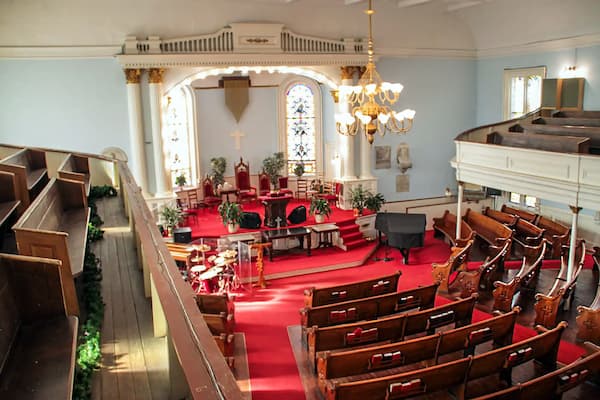
The church sanctuary features remarkable design elements reflecting African heritage:
- Diamond-Pattern Floor: Sanctuary floor features distinctive diamond pattern formed by ventilation holes
- African Symbolism: Diamonds represent traditional African designs and possibly secret religious symbols
- Hand-Carved Pews: Original wooden pews crafted by church members
- Raised Pulpit: Central elevated pulpit emphasizing preaching's importance
- Choir Loft: Gallery space for musical worship central to Black Christian tradition
- Simple Elegance: Unadorned walls allowing focus on worship and community
- Natural Light: Large windows providing illumination in pre-electricity era
Underground Railroad Connection
First African Baptist Church played documented role in Underground Railroad, sheltering escaped slaves seeking freedom. The sanctuary floor contains over 150 diamond-shaped holes—originally explained as ventilation, but historical research suggests these holes allowed air into the cramped basement where escaped slaves hid during dangerous northward journeys. Guides share stories of refuge provided, risks taken by congregation members, and network of support helping enslaved people escape bondage. Standing above those ventilation holes, visitors connect tangibly with freedom struggle and those who risked everything for liberty. This physical evidence makes abstract history visceral and immediate.
Education & Community Empowerment
From its founding, First African Baptist Church emphasized education as path to empowerment. Despite laws prohibiting teaching enslaved people to read, the church conducted clandestine classes teaching literacy, Bible study, and basic education. After emancipation, the church established formal schools educating freed people. This educational mission continues through modern programs serving Savannah's community. The church's commitment to education reflects understanding that literacy and learning enable self-determination and full participation in American democracy.
Civil Rights Movement Legacy
During the Civil Rights Movement, First African Baptist Church provided meeting space, spiritual support, and organizing center for Savannah's civil rights activists. The church's long history of resistance and empowerment made it natural hub for 1960s activism challenging segregation and discrimination. Civil rights leaders addressed congregations, strategy meetings occurred in church halls, and members participated in demonstrations and voter registration drives. This activism continued the church's historical role as space for African American self-determination and justice seeking.
Living Church & Worship
First African Baptist Church remains active, vibrant congregation maintaining worship services and community programs. Sunday services feature traditional African American worship style with spirited preaching, gospel music, congregational participation, and communal fellowship. Visitors attending services experience living Black church tradition—not museum piece but continuing community of faith. The energy, music, and spiritual power of worship demonstrates why Black church has served as cornerstone of African American community for centuries.
Musical Heritage
Music has always been central to worship at First African Baptist Church. The church maintains strong gospel choir tradition with roots in African musical practices and spirituals sung during slavery. These spirituals often contained coded messages about escape routes and freedom, making music both spiritual expression and resistance tool. Contemporary gospel music continues this tradition of joyful, powerful expression connecting earthly struggle with divine promise. Visitors often cite the church's music as profoundly moving aspect of their experience.
Tours & Historical Interpretation
Church tours provide comprehensive historical context:
- Knowledgeable Guides: Church members sharing history and personal connections
- Underground Railroad History: Detailed explanation of church's role in freedom network
- George Liele Story: Founding pastor's remarkable life and ministry
- Architecture & Symbolism: Explanation of building's unique features
- Slavery & Freedom: Honest discussion of slavery's brutality and liberation struggle
- Contemporary Ministry: Church's ongoing community service and mission
- Q&A Opportunity: Guides welcome questions and discussions
Preservation & Ongoing Ministry
Maintaining this historic structure while serving contemporary congregation requires ongoing preservation efforts. The church balances historic preservation with living community's needs—upgrading facilities while respecting historical integrity, maintaining original features while ensuring safety and accessibility. Visitor donations help fund necessary preservation work ensuring this irreplaceable landmark survives for future generations. The church demonstrates how historic buildings can remain vital community resources rather than merely museums.
National Historical Significance
First African Baptist Church's significance extends beyond Savannah to American history broadly. The church represents African American faith, resistance, community-building, and freedom struggle spanning 250+ years. It provides tangible connection to slavery's brutality, Underground Railroad courage, post-emancipation challenges, Civil Rights Movement activism, and ongoing quest for justice. Visiting the church offers profound insights into African American experience—resilience, spirituality, community strength, and continuous struggle for full equality and human dignity.
Respectful Visiting Guidelines
When visiting this sacred and historic space:
- Modest Dress: Appropriate attire respecting church setting
- Quiet Respect: Maintain decorum recognizing sanctuary's sacred nature
- Photography: Ask permission; no flash photography during services
- Listen Carefully: Stories shared deserve thoughtful attention
- Support Mission: Donations support preservation and community programs
- Attend Services: Consider attending Sunday worship for complete experience
- Reflect Deeply: Allow time to absorb site's profound historical significance
Educational Impact
First African Baptist Church serves essential educational function, teaching visitors about slavery, resistance, Black church tradition, Underground Railroad, and African American contributions to American democracy. For many visitors, particularly those unfamiliar with African American history, the church provides transformative educational experience. Schools bring students for field trips, scholars conduct research, and individuals seeking understanding find powerful learning opportunity. This educational mission honors ancestors who founded the church believing education empowers and liberates.
Pairing Church Visit with Cultural Evening
First African Baptist Church provides profound historical and spiritual experience that enriches evening at the theatre. Tour the church afternoon, reflect on its powerful history, walk through historic district contemplating what you've learned, enjoy dinner, then attend New Oak Theatre performance. The combination creates meaningful day connecting struggle and art, history and creativity, difficult past and hopeful present. Like theatre, the Black church has provided space where African Americans created beauty, told stories, maintained dignity, and imagined liberation—both institutions demonstrating art's power to sustain humanity through adversity.
Visitor Information
Parking
Street parking around Franklin Square and on Montgomery Street. Public parking garage at Ellis Square within walking distance. Metered parking available.
Accessibility
- Wheelchair accessible
- Accessible parking available
- Near public transit
Wheelchair accessible entrance via ramp. Main sanctuary accessible. Basement not wheelchair accessible. Street parking on Montgomery Street and Franklin Square.
Related Attractions
- City Market
- Ellis Square
- Owens-Thomas House
- Telfair Museums
- Savannah Waterfront
- New Oak Theatre