Temple Mickve Israel
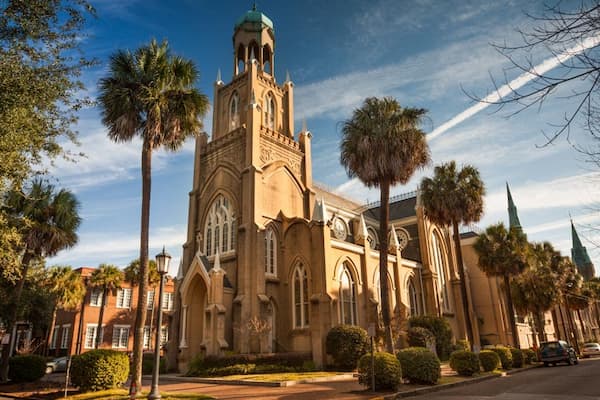
Temple Mickve Israel represents the third oldest Jewish congregation in the United States, founded in Savannah in 1733 when the colony was only five months old. The current Gothic Revival synagogue, completed in 1878, stands as one of Savannah's most architecturally distinguished religious buildings. The temple houses extraordinary historical artifacts including Torah scrolls brought from Europe, historic documents, and religious objects spanning nearly three centuries of American Jewish history.
Location
20 E Gordon Street, Savannah, GA 31401
Monterey Square, Historic District
Hours
Tours Monday-Friday 10 AM - 12 PM and 2 PM - 4 PM
Closed Jewish holidays and major holidays. Tours by appointment recommended. Services Friday evening and Saturday morning (visitors welcome). Museum viewing included in tour.
Pricing
$ (Budget-Friendly)
Suggested donation $5 per person. Free for children. Tours include synagogue sanctuary and museum. Special group tours available by appointment.
Best Time to Visit
Time Needed
45 minutes to 1 hour for tour and museum
Discover More Things to Do in Savannah
Find the best dining, attractions, entertainment, and experiences across Savannah. Create your perfect itinerary and discover why the Hostess City captivates every visitor.
Temple Mickve Israel: Nearly Three Centuries of American Jewish History
Temple Mickve Israel stands as one of the oldest Jewish congregations in the United States, tracing its origins to July 11, 1733—just five months after James Oglethorpe founded the Georgia colony. When 42 Sephardic and Ashkenazic Jews arrived in Savannah aboard the ship William and Sarah, they established what would become the third oldest Jewish congregation in America (after New York's Shearith Israel and Newport's Touro Synagogue). This pioneering community helped shape Savannah's character and demonstrated early American religious pluralism. The congregation's survival through colonial era, Revolutionary War, Civil War, and changing demographics testifies to Jewish community's resilience and Savannah's enduring tolerance.
Early Jewish Settlement in Georgia
The arrival of Jews in colonial Savannah was controversial yet consequential. Though James Oglethorpe's trustees initially opposed Jewish settlement, Oglethorpe himself welcomed the refugees, particularly after Dr. Samuel Nuñez successfully treated colonists during a deadly epidemic. The Jewish settlers contributed significantly to the struggling colony's survival, bringing medical expertise, commercial networks, and determination. They established the first Jewish congregation in the South and helped shape Georgia's character of religious tolerance. Their integration into colonial life while maintaining religious identity established patterns that would characterize American Jewish experience.
The Gothic Revival Synagogue
The current Temple Mickve Israel building, completed in 1878, represents the congregation's third synagogue structure in Savannah. Designed in Gothic Revival style by architect Henry G. Harrison, the building showcases distinctive architectural features:
- Gothic Arches: Pointed arch windows and doorways characteristic of Gothic style
- Ornate Towers: Twin towers flanking facade creating dramatic street presence
- Stained Glass: Magnificent stained glass windows featuring Jewish symbols and Hebrew text
- Vaulted Ceiling: Soaring sanctuary ceiling creating sense of transcendence
- Bimah & Ark: Central platform and ark housing Torah scrolls as sanctuary focal points
- Decorative Details: Intricate woodwork, plasterwork, and ornamental elements
- Acoustic Excellence: Superior acoustics for cantorial music and liturgy
The Sanctuary Experience
The synagogue sanctuary creates profound spiritual and aesthetic experience:
- Sacred Space: Atmosphere of reverence and beauty conducive to contemplation
- Light & Color: Stained glass windows casting colored light creating ethereal atmosphere
- Symbolic Elements: Jewish religious symbols throughout including Star of David
- Musical Heritage: Historic organ and strong cantorial tradition
- Seating Arrangement: Traditional synagogue layout with gender separation eliminated in reform congregation
- Architectural Harmony: Integration of Gothic Christian architectural form with Jewish religious function
The Historic Torah Scrolls
Temple Mickve Israel houses some of America's oldest Torah scrolls and Jewish religious artifacts:
- 1733 Torahs: Torah scrolls brought from Europe with founding congregation
- Sephardic Heritage: Scrolls reflecting Spanish and Portuguese Jewish traditions
- Holocaust Survivors: Torah rescued from destroyed European Jewish communities
- Continuous Use: Scrolls still used in religious services maintaining living tradition
- Preservation: Careful conservation ensuring scrolls' longevity for future generations
- Tangible History: Physical connection to centuries of Jewish life and survival
The Museum & Archives
The temple maintains significant museum collection documenting American Jewish history:
- Historic Documents: Letters, certificates, and records from colonial era forward
- Religious Objects: Ceremonial items including menorahs, Kiddush cups, spice boxes
- Textiles: Historic prayer shawls, Torah mantles, and religious textiles
- Photographs: Images documenting congregation and Savannah Jewish community
- Correspondence: Letters from prominent Jewish Americans including Revolutionary War figures
- Holocaust Memorial: Exhibits honoring Holocaust victims and survivors
- Community History: Documentation of Savannah Jewish community development
Reform Judaism in the South
Temple Mickve Israel represents one of the oldest Reform Jewish congregations in the United States, adopting Reform practices in the mid-19th century. This transition reflected broader American Jewish movement toward modernization while maintaining core Jewish identity. The congregation's evolution from Orthodox to Reform demonstrates adaptability while preserving essential traditions. Today the temple balances tradition and innovation, maintaining historic practices while engaging contemporary issues.
Notable Congregation Members
Throughout its history, Temple Mickve Israel counted numerous prominent Americans among its members:
- Dr. Samuel Nuñez: Physician who saved colonial Savannah from epidemic
- Francis Salvador: First Jewish American killed in Revolutionary War
- Mordecai Sheftall: Revolutionary War patriot and highest-ranking Jewish officer
- Raphael J. Moses: Georgia legislator and Confederate officer
- Prominent Merchants: Business leaders who shaped Savannah's economy
- Civic Leaders: Members who served Savannah in various leadership capacities
The Jewish Cemetery
Temple Mickve Israel maintains a historic Jewish cemetery (separate location) containing graves dating to the 18th century. The cemetery provides tangible connection to early Jewish settlement and includes gravesites of Revolutionary War veterans, prominent merchants, and community leaders. The weathered stones and Hebrew inscriptions tell stories of generations who built Savannah's Jewish community.
Educational Programs & Interfaith Dialogue
The temple emphasizes education and interfaith understanding:
- Public Tours: Welcoming visitors of all faiths to learn about Judaism and congregation
- School Programs: Educational visits for students studying American religious history
- Interfaith Events: Programs fostering dialogue among different religious communities
- Lectures & Symposia: Presentations on Jewish history, theology, and culture
- Holocaust Education: Programs ensuring Holocaust remembrance and education
- Cultural Events: Concerts, exhibitions, and cultural programming
Symbol of American Religious Tolerance
Temple Mickve Israel embodies American ideals of religious freedom and pluralism. The congregation's survival and prosperity in colonial Savannah when Jews faced restrictions in many places demonstrated early American commitment to religious tolerance. Oglethorpe's decision to welcome Jewish settlers despite trustee opposition set precedent for religious diversity. The temple's ongoing presence reminds visitors that religious freedom represents foundational American value requiring constant protection.
Gothic Revival in Jewish Architecture
The temple's Gothic Revival architecture represents interesting cultural phenomenon—Jewish congregation adopting Christian architectural style. This adaptation demonstrated Jewish integration into American culture while maintaining distinct religious identity. The Gothic forms create transcendent sacred space regardless of religious tradition. This architectural choice reflects Reform Judaism's engagement with broader American culture while preserving Jewish distinctiveness.
Living Community & Continuity
Temple Mickve Israel remains active, vibrant congregation maintaining worship services, religious education, and community programs. The temple isn't merely historic site but living religious community connecting present to nearly three centuries of Jewish life in Savannah. This continuity makes visiting the temple particularly meaningful—witnessing living tradition rather than preserved artifact.
Visiting Temple Mickve Israel
Guidelines for respectful visits:
- Modest Dress: Appropriate attire respecting religious setting
- Head Covering: Men may wish to wear kippah (available at entrance)
- Quiet Respect: Maintain appropriate decorum in sacred space
- Photography: Ask permission before photographing; no flash photography
- Tour Timing: Advance appointment recommended for comprehensive tour
- Religious Services: Visitors welcome at services; arrive early, follow congregation's lead
- Questions Welcome: Guides appreciate genuine questions and interest
Significance Beyond Savannah
Temple Mickve Israel's importance extends beyond local history to American Jewish history and American religious history broadly. As one of earliest Jewish congregations, it provides evidence of Jewish contribution to American founding and development. The temple demonstrates how religious minorities shaped American character while maintaining cultural identity. Visiting the temple offers insights into American pluralism, religious freedom, and Jewish experience in America.
Pairing Temple Visit with Cultural Evening
Temple Mickve Israel provides meaningful cultural and spiritual enrichment before evening theatre. Tour the synagogue, reflect on its profound history, explore Monterey Square, enjoy dinner nearby, then attend New Oak Theatre performance. The combination creates day connecting faith, history, architecture, and performing arts—all expressions of human creativity and meaning-making. The temple's enduring presence reminds us that cultural institutions like theatres and synagogues enrich communities across generations.
Visitor Information
Parking
Street parking around Monterey Square and on Gordon Street. Parking garage on Whitaker Street within walking distance. Metered parking available.
Accessibility
- Wheelchair accessible
- Accessible parking available
- Near public transit
Wheelchair accessible entrance and main sanctuary. Elevator to all levels. Accessible restrooms. Street parking on Gordon Street and Monterey Square. Parking garage nearby.
Related Attractions
- Mercer-Williams House
- Monterey Square
- Forsyth Park
- Telfair Museums
- First African Baptist Church
- New Oak Theatre